 Skip to content
- Home
- »
- Oral, Dental and Maxillofacial Surgery
Oral, Dental and Maxillofacial Surgery

Oral and dental health is very important both in itself and for overall good health. One of the key departments dealing with many issues related to oral and dental health is the oral and maxillofacial surgery department. In the oral and dental surgery department, which is a specialized field of dentistry, individuals are diagnosed and treated using oral, dental, and maxillofacial surgery instruments, effective surgical methods, and detailed analyses.
It is possible to apply to private or state-run healthcare institutions such as clinicals for oral, dental, and maxillofacial surgery. To understand what oral and maxillofacial surgery entails, it is necessary to know what conditions are treated in this department and what treatment methods are used. With this information, you can benefit from effective treatments by choosing reliable and comprehensive healthcare providers such as Dentaliva, which is among the oral and maxillofacial surgery clinics.
What Does Oral, Dental, and Maxillofacial Surgery Treat?
Oral, dental, and maxillofacial surgery treats many different health problems. As the name suggests, the oral, dental, and maxillofacial surgery department deals with health problems that occur in tissues such as teeth or jaw tissue and require surgical intervention. Unlike fields such as jaw surgery endodontics or classical dentistry, it is a department that treats much more complex cases with effective interventions. People referred to as oral, dental, and jaw surgery doctors are also dentists. However, these individuals complete a 5-year education in dentistry and then undergo an additional 4-year specialty training in oral, dental, and maxillofacial surgery. Upon successfully passing the DUS (Specialty Exam for Dentists) as a result of this training, they become oral, dental, and maxillofacial surgery specialists and provide services in this field in addition to dentistry.
Diseases Treated by Oral and Maxillofacial Surgery
Contrary to popular belief, oral and maxillofacial surgery is a field that deals with many health problems, not just one or a few. Some of the health problems frequently addressed in the field of oral and maxillofacial surgery can be explained in a few points.
- Impacted Teeth
Although many people are unaware of it, impacted teeth are actually a very important problem. If a tooth remains impacted, meaning that despite the presence of the tooth root and the need for it to erupt, it cannot erupt, this situation negatively affects other surrounding teeth and even tissues such as the jaw joint and soft tissue. While impacted teeth in children can be resolved by methods such as extracting baby teeth to make room for the existing tooth, in adults, it must be resolved with medical materials such as oral and maxillofacial surgery instruments and effective surgical interventions. In particular, impacted wisdom teeth are a very common condition and an important problem that must be addressed by an oral and maxillofacial surgeon.
- Cysts Forming in the Jaw
Cysts may form in the jaw region, both in bone tissue and in other tissues that can be referred to as soft tissue. Some cysts are congenital, while others may develop later in life. It is particularly important and necessary to remove solid and malignant cysts using jaw surgery methods in order to preserve the jaw structure and keep the general health condition under control.
- Jaw Joint Disorders
Jaw joint disorders, medically known as TMD disorders, are health problems that are usually congenital. However, in some cases, factors such as facial paralysis or traumatic accidents can also cause temporomandibular joint disorders to occur later in life. Temporomandibular joint disorders can lead to many different problems, ranging from restricted mouth movement to clicking sounds from the joint, headaches, and jaw locking. For this reason, temporomandibular joint disorders must be treated in the field of oral and maxillofacial surgery, which addresses this health problem.
The Importance of Oral and Maxillofacial Surgery
Oral and maxillofacial surgery is very important for many different reasons. It is not possible to treat all kinds of problems related to oral and dental health with limited methods such as classic dental treatments. At this point, jaw surgery methods come into play, making it possible to treat very important health problems such as impacted teeth or jaw joint disorders in an ideal, personalized, and correct manner. For all these reasons, it is important not to overlook the importance of the oral, dental, and maxillofacial surgery department, just like other health departments and dental specialties.
Does Oral and Maxillofacial Surgery Apply Braces?
Oral and maxillofacial surgery does not apply braces. Applying braces, i.e., wire treatment performed to align teeth correctly, is generally a treatment handled in the field of orthodontics. However, in rare cases, oral and maxillofacial surgeons and orthodontists may consult and jointly decide on braces treatment. Individuals who need braces treatment due to problems requiring surgical intervention in the jaw should first consult the oral and maxillofacial surgery department.
The Importance of Choosing the Right Healthcare Facility for Oral, Dental, and Maxillofacial Surgery Treatment
In order to receive appropriate, reliable, and correct treatment in oral, dental, and maxillofacial surgery, you need to make the right choice of clinic for maxillofacial surgery. When trying to make an appointment for oral, dental, and maxillofacial surgery, you may come across many different healthcare facility options. Unfortunately, some of these institutions are not officially recognized as healthcare institutions, meaning they have not obtained the necessary permits from the Ministry of Health and do not meet the required standards. You should avoid such institutions and choose reliable and satisfactory service providers such as Dentaliva for your oral and maxillofacial surgery appointment. By booking an appointment directly with Dentaliva for oral and maxillofacial surgery, you can benefit from comprehensive and professional healthcare services without wasting time.
The Most Common Treatments in Oral and Maxillofacial Surgery
Multiple treatments are performed in the field of oral and maxillofacial surgery. The most common treatment methods in the field of oral and maxillofacial surgery can be categorized under several headings.
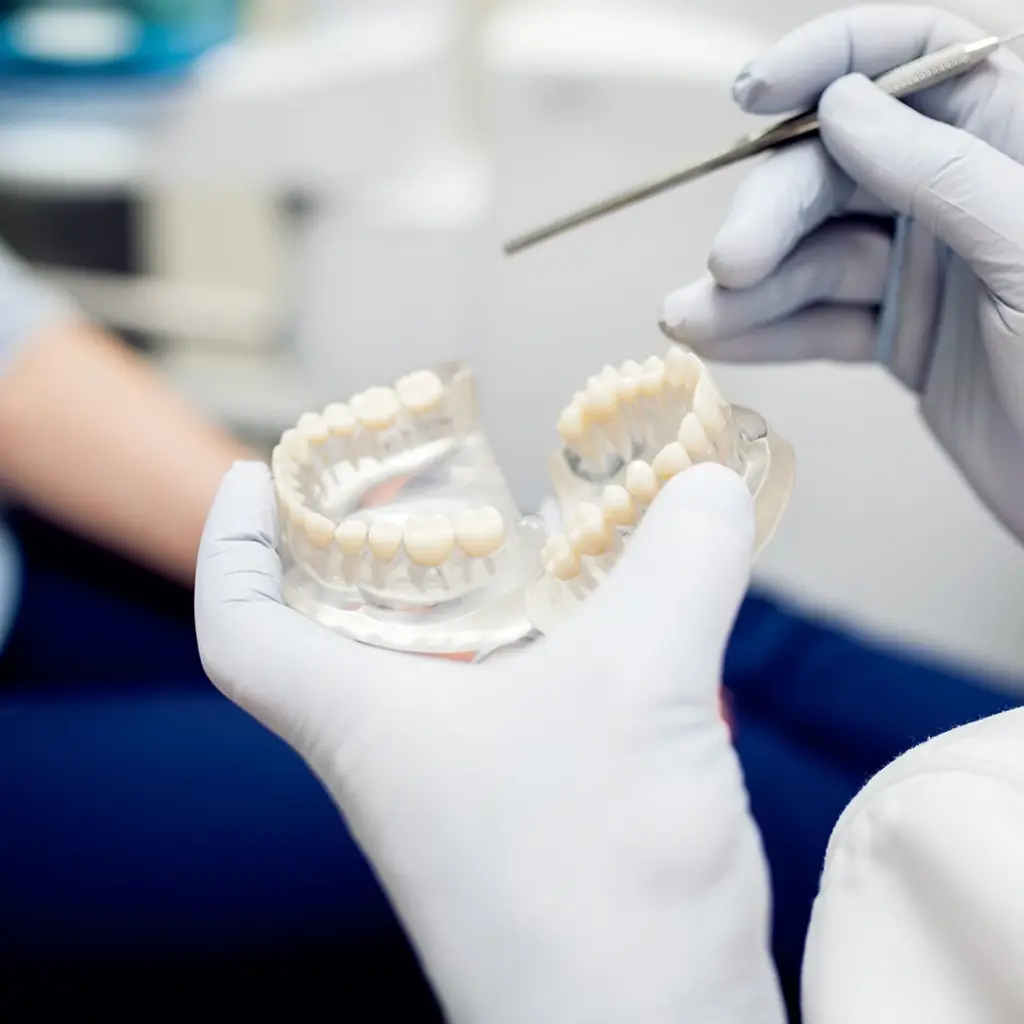
Oral, Dental and Maxillofacial Surgery
Impacted Tooth Treatment
Impacted tooth treatment is usually performed on adults as a result of impacted wisdom teeth, but it can also be performed in other situations, albeit rarely. In impacted tooth treatment, imaging techniques such as panoramic X-rays are first used to obtain information about the position of the tooth or teeth in question. Based on this information, a detailed plan is made, and the surgical intervention phase begins. During the surgical intervention phase, local anesthesia is usually used to prevent the patient from feeling pain. After local anesthesia is administered, an incision is made, and the impacted tooth is removed in pieces or whole, depending on the situation. Special materials known as oral and maxillofacial surgery instruments are used in impacted tooth treatment, allowing treatment to be performed without damaging other surrounding tissues and teeth.
Implant Treatments
Another type of treatment frequently performed in the oral and maxillofacial surgery department is implant treatment. Especially in comprehensive implant treatments, jaw surgery expertise is required because delicate surgical intervention is necessary. In implant treatment, artificial tooth roots are placed in the gum tissue and jawbone, permanently, safely, and comfortably solving individuals’ toothlessness problems.
Treatment of Cysts in the Mouth and Jaw Areas
Another treatment frequently performed in the oral and maxillofacial surgery department is the treatment of cysts in the mouth and jaw area. In particular, a maxillofacial surgeon and their expertise are needed to remove malignant cysts and, in this context, to perform biopsies on benign cysts to determine whether they are benign or malignant. Cysts in the mouth and jaw areas can be treated correctly with operations performed by maxillofacial surgeons.
Treatment of Jaw Injuries
Jaw injuries can also be treated in the field of oral and maxillofacial surgery. Especially in cases of trauma involving a hard blow to the mouth and jaw area, it is necessary to consult the oral, dental, and maxillofacial surgery department. In cases such as a broken jawbone or various types of damage to the joints, treatment is performed through closed or open surgery.
Frequently Asked Questions
How do I make an appointment for oral, dental, and maxillofacial surgery?
Oral and maxillofacial surgery appointments can be made in different ways. At Dentaliva, we care about the satisfaction and overall health of our patients, so we respond as quickly as possible to patients who request an oral and maxillofacial surgery appointment.
Does oral and maxillofacial surgery perform jaw surgery?
Oral and maxillofacial surgery performs jaw surgery. When jaw surgery is mentioned, the first type of operation that comes to mind is complex operations performed to treat jawbone fractures. In addition to these surgeries, the oral and maxillofacial surgery department also performs operations to remove impacted teeth or dental implant treatments. For all these reasons, if you have a problem with your jaw and it is determined that you need jaw surgery, you should consult an oral and maxillofacial surgeon to receive appropriate treatment for your problem.
How can the difference between oral and maxillofacial surgery and dentistry be explained?
When explaining the difference between oral and maxillofacial surgery and dentistry, it is important to first understand that these two fields are not independent of each other. Individuals who are oral and maxillofacial surgeons are also dentists. However, not every dentist is an oral and maxillofacial surgeon. While only 5 years of dental education is sufficient for dentistry, oral and maxillofacial surgery requires 4 years of additional training in oral and maxillofacial surgery on top of the 5 years of dental education. Therefore, oral and maxillofacial surgery is a more comprehensive field that also covers complex operations such as jaw surgery.
Can you make an appointment directly for oral and maxillofacial surgery?
It is possible to make an appointment directly for oral and maxillofacial surgery. However, in state hospitals, you may have to wait a while to get an appointment for departments such as oral and maxillofacial surgery. The main reason for this is the high volume of patients in state hospitals. At private healthcare institutions such as Dentaliva, and especially at clinics offering services in the field of dentistry, appointments can be made directly. Therefore, to make a direct appointment for oral, dental, and maxillofacial surgery, you can contact healthcare institutions such as Dentaliva and complete your appointment process quickly and smoothly.
Are oral, dental, and maxillofacial surgery treatments difficult?
The difficulty of oral, dental, and maxillofacial surgery treatments varies depending on the situation. The difficulty of treatments performed in any field of healthcare can vary depending on the content of the treatment and the methods adopted by the healthcare professional performing the treatment. This is also the case for oral, dental, and maxillofacial surgery treatments. While some treatments are quite difficult, others can be short-term and easy. For example, although difficult procedures are performed during jaw surgery, the individual does not experience any difficulty or, in other words, pain, but the individual may experience pain after the operation. In summary, you need to consult your doctor to obtain accurate information about the difficulty of oral, dental, and maxillofacial surgery treatments.
How much do oral, dental, and maxillofacial surgery cost?
Oral, dental, and maxillofacial surgery prices may vary depending on the situation. There are several main factors that affect oral, dental, and maxillofacial surgery prices. Each of these factors directly or indirectly affects oral, dental, and maxillofacial surgery prices or, in other words, oral, dental, and maxillofacial surgery treatment prices. The first factor affecting oral and maxillofacial surgery prices is the region where the healthcare facility is located. For example, jaw surgery prices in Istanbul may be slightly higher than in other provinces because high expenses can increase the cost of services. In addition to all this, the content of the treatment and the experience of the specialist performing the treatment also affect oral and maxillofacial surgery prices.
